Concrete cutting in Saint John IN - a clean line and the rest left intact
Need a trench, a doorway or a slab section out? We cut only what the job calls for and leave the rest intact.
- Service
- Concrete cutting
- Call
- (219) 351-9579
When does a slab or wall need cutting?
One bad section of slab
One panel of your driveway or patio is cracked or sunk while the rest sits fine, which usually means the ground under that spot gave way. Cutting it out along a clean line lets you replace that piece instead of the whole slab, and waiting lets water get under the broken edges and work on the panels next to it.
A drain line under the floor
You're adding a bathroom or chasing a broken line under a basement or garage floor, and that means a trench cut through the slab. A straight saw cut patches cleaner than a busted-out hole, and putting it off usually lets a leak keep washing out the ground under your floor.
A basement wall with no window
You want a window or a way out of the basement, and the wall is solid concrete. Cutting a wall that holds up your house is a bigger job than a floor cut, so it's worth starting the planning early, since the structural questions take time to answer.
What does concrete cutting in Saint John involve?
Concrete cutting in Saint John means sawing a slab or a wall with a diamond blade along a marked line, so you can open a trench, make a new opening or take out one section without breaking up more concrete than the job needs.
Most cuts I'm asked about are a broken driveway panel, a trench under a basement or garage floor, or a new opening in a foundation wall. The first thing that sets the price is slab or wall, because floors and driveways get flat sawn with a saw that rolls across the surface, while walls need a saw mounted on a track, and wall sawing usually costs more. After that it's how long and how deep the cut runs and whether there's rebar, the steel bars set inside to hold the concrete together, since thicker or reinforced concrete costs more per foot. The other big piece is whether you want the cut pieces broken up and hauled off, because sawing and removal are two separate jobs and the removal can add more than the cut itself. The schedule mostly turns on permit questions, utility marking if there's digging, and for a wall opening, getting the structural answers first. My written estimate spells out which of those your job includes.
Details to note before an estimate
- Slab or wall, and where it is
- Rough length and depth of the cut
- Indoor or outdoor work
- Whether the pieces get hauled off
How we handle concrete cutting
Before anything gets cut, we settle whether it's a slab or a wall, how deep the cut goes and whether the pieces get hauled off or stay put, so your quote covers the whole job. Then I mark the lines and we set up the saw that fits the job. Inside a home we use a saw that's safe for indoor air and keep water on the blade the whole time, which holds the dust down. Once the cut is done, we break out and haul what the estimate says, or leave the panels in place if you've got plans for them, and we clean up before we leave.
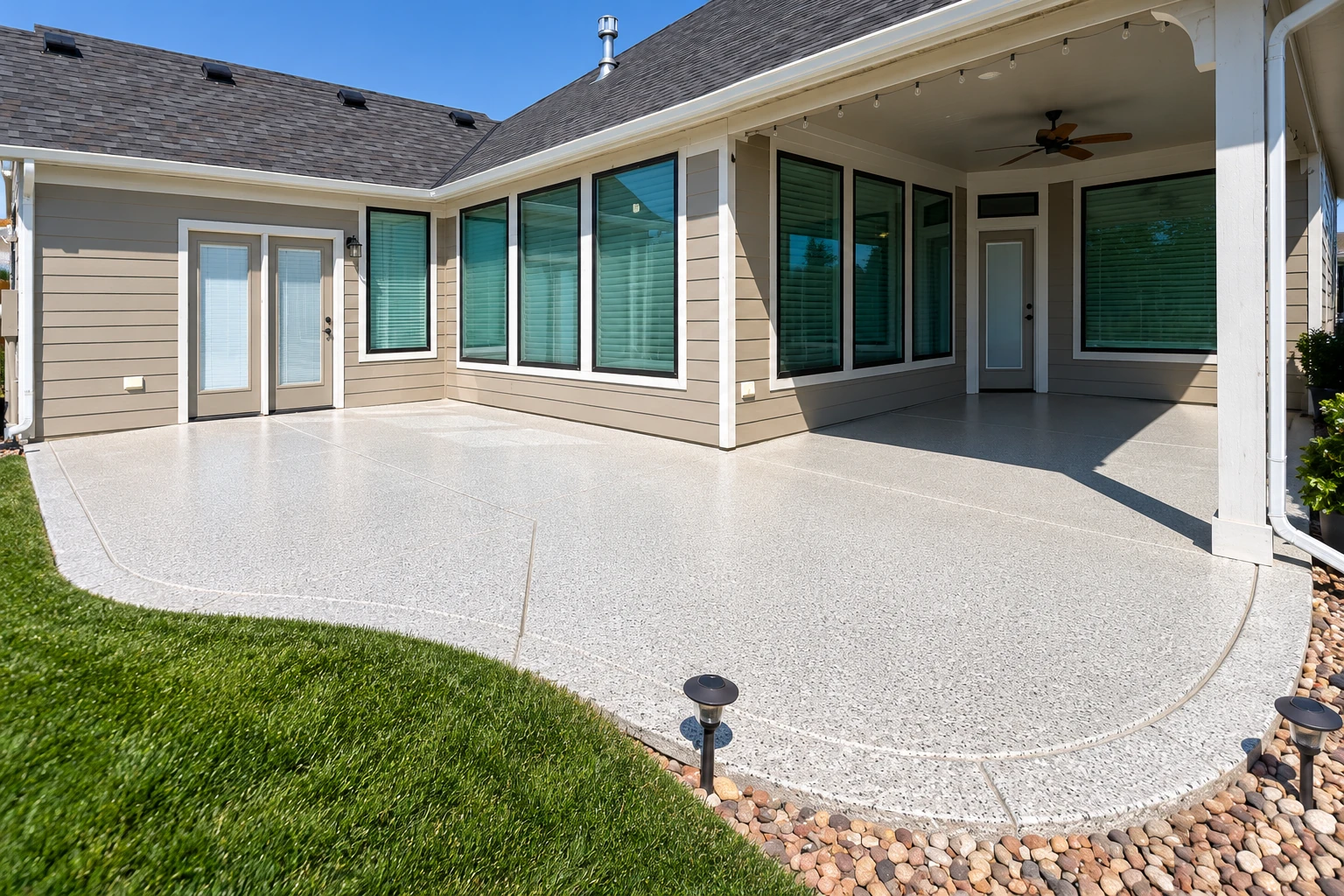
A cut is often the first step of a bigger job. When a broken section of driveway comes out, we can pour the replacement as part of our concrete driveway building work, digging out and packing the base under it so the new piece doesn't settle the way the old one did. A cut-out patio section or a patio that has to meet a new door falls under concrete patio construction, sloped so the water runs away from your house.
Work that often follows a cut
Concrete driveway building
When more than one or two panels are cracked or sunk, a new driveway on a packed base often makes more sense than patching cut sections.
Concrete patio construction
After a patio section is cut out, a new slab can be laid out to drain away from your house instead of toward it.
What happens when you call about concrete cutting in Saint John?
Call or send the form
Call (219) 351-9579 or send the form with where the cut is, slab or wall, and about how long it runs. We get back to you and set a time for me to come look.
I measure and write it up
I come out, measure the cut, check the grade around it and ask what you want done with the pieces. You get a written estimate that spells out what's included, the sawing plus any breaking, hauling or patching, so you know what removal adds before you decide.
We sort out the city
Once you say go, we check with the building office in your city, handle the permit if the job needs one and plan around the weather and any inspection. If there's digging under the slab, we plan around the utility marking too.
Check the lines, then cut
Before the saw starts I check the lines myself, because a cut can't be undone. If we're pouring a replacement afterward, I check the forms and string lines before the truck shows up.
What people ask about concrete cutting
How much does concrete cutting cost per foot in Saint John?
Concrete saw cutting across the US usually runs about $4 to $25 per linear foot of cut, and that's a national range for the sawing alone, not our price. Deeper or reinforced concrete sits toward the top, and on a small job a minimum or trip charge, the cost of bringing the crew and saw out, can outweigh the per-foot rate. Breaking and hauling come on top of that, which is why I measure before I write your estimate.
Do I need a permit to cut concrete in Saint John, IN?
It may need one, and the Town of St. John's Building and Planning Department is the office to ask, because it takes permits to construct, renovate or demolish buildings and its list names renovations and repairs but not concrete cutting. We check with the building office in whatever city the job is in and handle the permit when one's needed. We're fully licensed and insured, and the city's permit portal asks businesses that build, repair or alter buildings to register their company.
Can I cut a new egress window into my basement wall?
Often you can, as long as the opening is planned around what the wall holds up. One guide on cutting egress windows, the ones big enough to climb out of, says the lintel, the beam over the opening, has to be sized to the load above and the wall's thickness, and it advises talking to a structural engineer or the lintel supplier before you cut. That conversation comes first, and the wall saw comes after.
Do I need to call 811 before cutting concrete in Indiana?
If the job involves digging, yes, because Indiana law requires anyone who digs to contact Indiana 811 at least two full working days before starting. After the request, utility crews can come out and mark the underground lines at no charge. A trench for a drain line or a slab section you're replacing usually means digging, so we build those days into the schedule.
What is the best way to cut concrete inside a basement?
The best way is with a saw that doesn't run on gasoline, because one cost guide warns that gas-powered saws create a carbon monoxide hazard indoors and points to a basement job where workers died. Keeping water on the blade cuts the dust way down too. It's fair to ask any crew how their saw is powered and whether they cut wet before they start.
How do I get a round hole cut through a concrete floor?
Round holes for pipes, drains and conduit are normally core drilled, using a hollow bit that pulls out a plug, and they're priced separately from saw cuts. In structural or post-tensioned concrete, which has steel cables pulled tight inside it, the slab may need scanning first to find rebar, those cables, pipes and conduit. Tell me where the hole goes and what's running through it when you call.
Get a written estimate for your concrete cut
Tell us where the cut is, whether it's slab or wall, about how long it runs and whether the pieces go or stay. We reply within one business day to set a time, and I come out for a free on-site estimate that puts in writing what's included. No pressure, no obligation.
Explore our services and areas
Services
- Concrete driveway building
- Concrete patio construction
- Stamped concrete services
- Concrete sidewalk building
- Garage floor concrete
- Decorative concrete
- Concrete retaining walls
- Concrete floor installation
- Concrete pool decks
- Concrete steps construction
- Slab foundation building
- Foundation installation
- Concrete parking lot building
- Concrete footings
- Foundation raising
Tell us where your cut goes
Call (219) 351-9579 or send the form with the cut's location and rough length, and I'll know on the visit whether it's a floor saw, wall saw or core drill job.