Concrete floor installation in Saint John IN - a floor laid out right before the pour
Cracked, uneven or damp floor in your basement or garage? We pour a new slab planned for moisture, cracks and how you use it.
- Service
- Concrete floor installation
- Call
- (219) 351-9579
How can you tell your concrete floor needs replacing?
Cracks that keep growing
You see cracks that get wider over a season, or one side of a crack sits higher than the other. That usually means the ground under the slab has settled, and the longer it waits, the more water gets in and breaks the edges into a trip hazard.
Damp patches or musty smell
Dark spots show up on the basement floor, or rugs and boxes sitting on it start to smell. Usually ground moisture is coming up through a slab with nothing under it to slow it down, and left alone it ruins whatever you put on top.
Water sitting in low spots
Snowmelt or a leak puddles in the garage or basement instead of running to the drain. The floor has sunk or was never sloped right, and water that keeps sitting there soaks the surface until the top starts to chip.
What goes into a new concrete floor in Saint John?
Concrete floor installation in Saint John means placing a new slab for your basement, garage or another space, then curing it, which means keeping the new concrete moist while it sets so it comes out strong. Most of the job happens before the truck arrives, in the ground prep, what goes under an indoor floor and where the joints go, and that work decides how the floor holds up.
Most calls start with an old floor that's cracked, sunk or stays damp, or a space that's never had a slab at all. The price moves with the floor's size, whether old concrete has to be broken out and hauled off, how much the ground needs before we pour and whether a moisture layer goes underneath, and the schedule moves with the weather and any inspection the city sets. When I come out, I put all of that in writing so you can see what's included before you decide. We're fully licensed and insured, and we check with the city on permits and handle the permit when your floor needs one.
Details to note before an estimate
- Rough size of the floor
- Basement, garage or another space
- Old floor to remove, cracks or damp
- Flooring you plan to put on top
How we handle concrete floor installation
I start with the ground, not the finish. If there's an old floor, we break it out and haul it away, then dig out soft dirt and pack the subgrade, the layer the slab actually sits on, because a base that's only raked level settles and takes the floor down with it. For a floor inside the house, I go over with you what goes under the slab to hold back ground moisture before anything gets set. We check the grade so water runs to the drain or away from the house, pour early enough to stay out of the midday heat that leaves a weak, dusty top, and cut control joints, shallow grooves that give the slab a planned place to crack, while the concrete is still young. I'm straight with you that concrete cracks a little, so I show you up front where those joints go and why. If the budget's tight, I'd rather you pick a plainer finish than skimp on the base, because nobody sees the base on day one but you live on it for years.
A new floor often comes with other work around it. If the floor leads out to a back door or a walkout, we can pour concrete steps at an even height so nobody catches a toe at the threshold. If a pool is part of the plan, our concrete pool decks get the same base work and drainage check, with a finish meant for bare feet.
Other concrete work that goes with a new floor
Concrete pool decks
When a pool goes in, the deck around it has to drain away from the water and give bare feet decent grip on hot days.
Concrete steps construction
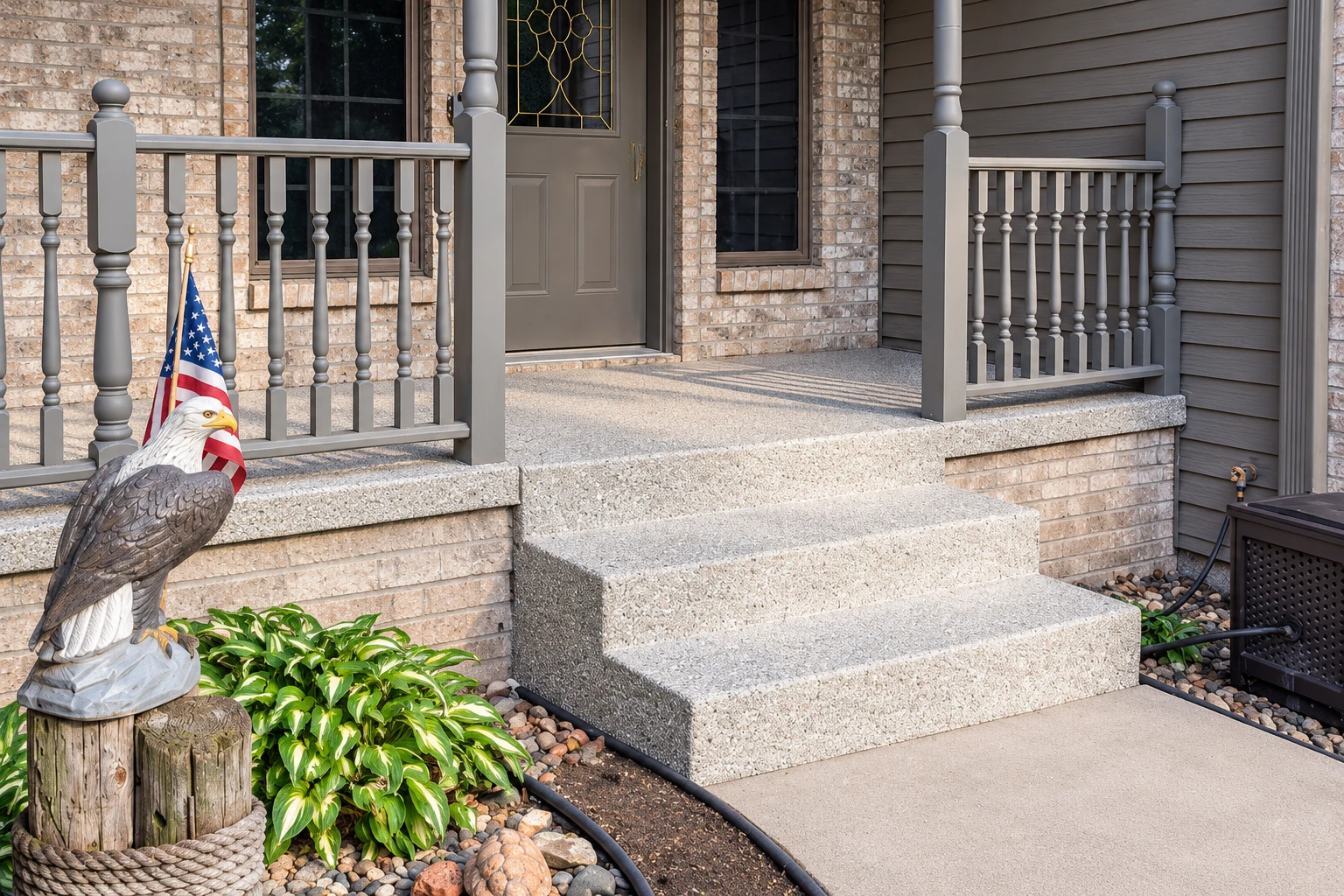
Worn or tilting steps at a door are a trip hazard, and new ones built at an even height make carrying groceries in much safer.
What happens after you call about a concrete floor in Saint John?
Call or send the form
Call (219) 351-9579 or send the form with the floor's rough size and where it is, and we'll set a time for me to come out. We're based in Saint John and work in the cities around it in northwest Indiana and just over the line in Illinois.
I measure and check grade
I come out myself, measure, check the grade and look at what's there now. You get a written estimate that spells out what's included, like breaking out and hauling the old floor where that applies, so there's no guessing on cost.
We plan around the city
Once you say go, we sort out permit questions and set the pour date around the weather and the pre-pour inspection St. John requires for basement and garage floors before any concrete goes in. The city also asks that 811 be called to mark utility lines before any digging starts, and we make sure that's done first.
Pour, finish and cure
I check the forms and string lines before the truck shows up, then work the pour and finish alongside our crew. Before we leave, we go over how to treat the floor while it cures.
Questions before you book a concrete floor
Will my new concrete floor crack?
A few small cracks are likely, because national industry guidance says all concrete tends to crack and a completely crack-free slab isn't possible. The same guidance says wire mesh can't stop cracking, but placed in the right spot it keeps cracks narrower. It's fair to compare bids on how each crew plans for cracks, and I'll walk you through how we do it.
How do I keep ground moisture out of a new basement floor?
Concrete industry guidance recommends a vapor retarder, a layer that slows ground moisture, directly under every slab inside a house. That guidance treats the chance of minor cracking with that layer as a smaller risk than moisture damaging the flooring on top. If you plan carpet, wood or vinyl down there, it's worth bringing up when I come out.
Can concrete be poured in winter in Indiana?
Yes, concrete poured in cold weather still gains enough strength and durability when it's properly mixed, placed and protected. Industry guidance counts it as cold weather when the air drops, or is expected to drop, below 40°F while the new concrete needs protection, so a winter floor needs a plan for protecting it. Guidance also says to clear snow and ice first and to pour only on ground that isn't frozen.
How much does a concrete floor cost near Saint John?
A concrete slab in the Chicago area usually costs about $5 to $14 per square foot. That's the going rate across the region for the slab work, not our price, so treat it as a rough guide. Your written estimate shows what your floor would run and exactly what's included.
How long does a new concrete floor take to cure?
Industry guidance says curing should start as soon as possible and keep the slab moist for at least 3 days, using a sprayed curing compound or damp burlap. Curing is the wait while the concrete hardens, and keeping it moist through that stretch is what lets the top come out strong instead of dusty.
Do I need a permit for a concrete floor in St. John, Indiana?
You may, since St. John requires a permit before you place another structure or renovate, repair or add to a building, and its Building and Planning Department handles those permits. The city takes applications through its online permit portal, by email or in person at that office, and the portal asks companies doing building and repair work to register. Whether your particular floor needs its own permit is something we check with the city when we take the job, and we handle it when it does.
Get a written estimate for your concrete floor
Send the form and we'll get back to you within one business day to set up a visit. I'll come out, measure and check the grade, then give you a free written estimate that spells out what's included. There's no pressure and no obligation.
Explore our services and areas
Services
- Concrete driveway building
- Concrete patio construction
- Stamped concrete services
- Concrete sidewalk building
- Garage floor concrete
- Decorative concrete
- Concrete retaining walls
- Concrete pool decks
- Concrete steps construction
- Slab foundation building
- Foundation installation
- Concrete parking lot building
- Concrete footings
- Foundation raising
- Concrete cutting
Talk to us about your new floor
Have the rough size, whether it's inside or out and when you'd like it poured, and the call or form takes just a few minutes.