
Concrete sidewalk building in Saint John IN - a walk that drains and grips when wet
Cracked, uneven or puddling walk? We take it out and pour a new one that sheds water and gives good footing on wet mornings.
- Service
- Concrete sidewalk building
- Call
- (219) 351-9579
How do you know your walk needs replacing?
Puddles that turn to ice
After rain, water sits in low spots instead of running off, which usually means the slab settled or never had any pitch. Left alone, those puddles freeze into slick patches every winter and keep soaking into the concrete.
Slabs tipped or lifted
One section sits higher than the next and leaves an edge that catches a toe, usually because the base settled with the dirt underneath. The gap tends to grow each year, and so does the chance someone trips.
Flaking, pitted surface
The top is coming off in patches and the stone underneath shows through, often from a weak top layer or winters working into it. Once it starts it keeps spreading, and the rough spots hold water that makes the next winter worse.
What does it take to put in a new concrete sidewalk?
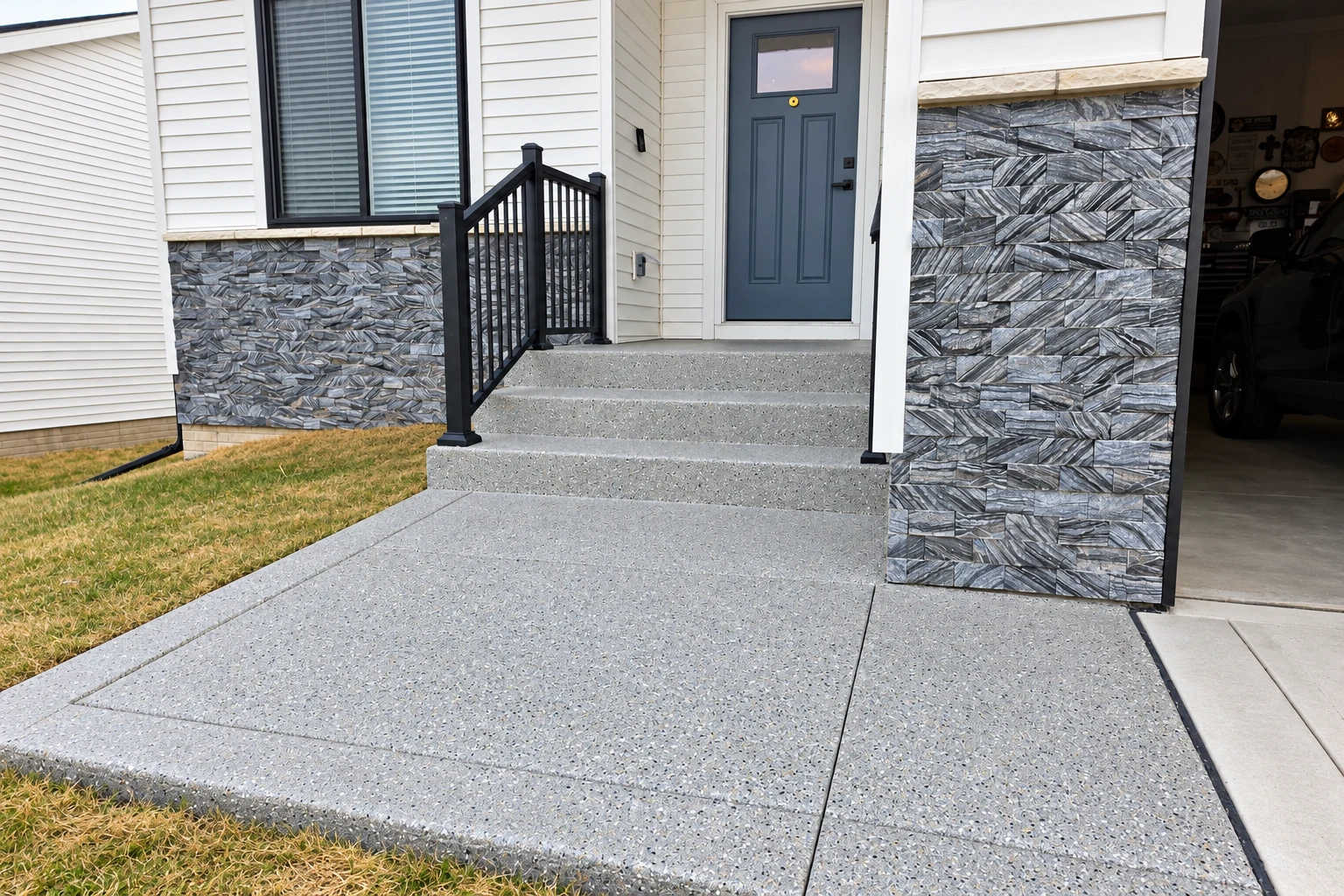
Concrete sidewalk building in Saint John means digging out a path, packing a base pitched to drain and pouring a slab with a textured top, so your walk sheds water and gives sure footing when it's wet.
Most calls about a walk start with a trip edge, a puddle that turns to ice, or a newer house that never got a proper path to the door. The price moves with the length and width, whether an old walk has to be broken out and hauled off, how much digging the route takes and how plain or fancy you want the top. The schedule mostly turns on the weather and the city, since we pour only when the ground is right and plan around any permit or inspection, and my written estimate spells out what's included so you can see where the money goes.
Details to note before an estimate
- Rough length and width of the walk
- Old walk or pavers to remove
- Where water collects today
- Steps or slopes along the route
How we build a concrete sidewalk
I start by setting string lines and checking the grade, because a walk has to give good footing on a wet morning, and that begins with a gentle pitch that carries rain off to the side and away from the house. We dig out the soft dirt and pack the subgrade, the ground the slab sits on, so the walk doesn't settle in patches later, then we pour early in the day, since midday heat can leave a weak, dusty top. The surface gets a broom finish, a light dragged texture that gives your shoes some grip, and we cut control joints, shallow grooves that give the concrete a straight place to crack instead of one it picks on its own. After that comes curing, keeping the new slab from drying out too fast so the surface reaches its full strength, and we treat that wait as part of the job. We also ask early whether you plan to salt the walk in winter, because that's worth settling before the concrete is ordered. If the budget gets tight, I'd keep the base and go plainer on the finish, because a nice top on a soft base still sinks. That's how we pour every walk, and it's why we can say satisfaction guaranteed on every job.
A walk often ties into other work around the house. If you'd like color or a pattern instead of a plain broom finish, that's decorative concrete, and we still keep enough texture on top for footing. If the walk runs to a garage with a cracked or pitted floor, I can look at the garage floor concrete on the same visit.
Other work that often goes with a new walk
Garage floor concrete
If your walk leads to a garage whose floor is cracked, pitted or holding water, a new slab there can be planned alongside it.
Decorative concrete
For a front walk people see every day, color, stamped patterns or a scored border can dress it up while keeping a surface that grips.
What happens after you call about a sidewalk
Call or send the form
Call (219) 351-9579 or use the form and tell us roughly where the walk will run. We'll set a time for me to come look at it.
I measure and check grade
I come out, measure the route and check which way the ground falls, so I know where the water will go. You get a written estimate that spells out what's included, like breaking out and hauling away an old walk where that applies.
We handle permits and prep
Once you say go, we check with the city's building office about a permit and plan the pour around the weather and any inspection the city schedules. Before anyone digs, we call 811 to get gas, electric and phone lines marked, as the city's building guidance asks.
Forms checked, then we pour
I check the forms and string lines before the truck shows up, then I'm on site with our crew through the pour and the finish. We'll let you know when the walk can take foot traffic and leave the site cleaned up.
Questions before you build a concrete sidewalk
How much does a concrete sidewalk cost in Saint John, IN?
A standard broom-finish concrete sidewalk usually costs about $6 to $15 per square foot installed across the US, and that's the general market range, not our price. Where your walk lands depends mostly on its size, whether an old walk comes out and how much digging the route needs. For a Saint John price on your walk, I'll measure it and put what's included in writing.
What is the best time of year to pour a concrete sidewalk in Saint John?
The best time is a dry stretch when the ground isn't cold, because concrete should go onto a base with no wet spots and no chill in it. Around here that usually means waiting out soggy spring weeks and finishing before the cold sets in late in the year, and I pick the pour day with the forecast in hand.
How do I compare quotes for a concrete sidewalk?
Ask each contractor how they'll compact and slope the base, because a walk should sit on a base packed evenly and pitched for drainage, and that's the part you can't see once it's poured. Then check that each quote says what's included, like removing the old walk and hauling it away.
Where do I apply for a sidewalk permit in St. John, Indiana?
Permits in St. John go through the Building and Planning Department, which asks you to file through its Cloudpermit portal, with email to permit2@stjohnin.gov or a paper copy at the department as backups. The department takes permits for new buildings and other structures on your property, so it's the place to ask whether your walk needs one, and Lake County's Plan Commission says it has no say inside incorporated places like St. John. If your walk needs a permit, we handle it.
Who is allowed to build a sidewalk in St. John?
Any contractor working in the Town of St. John has to be registered, insured and bonded with the Clerk's office for the current calendar year before starting work. It's fair to ask anyone you're considering whether they're registered for this year, and Saint John Concrete is fully licensed and insured.
Why does winter salt wear down a concrete walk?
Salt makes scaling, the top flaking off, worse because it keeps the concrete wetter and adds to the freezing and thawing that causes most of that damage in the first place. The residential code sets minimum requirements for concrete that faces freeze-thaw and deicers, so if you'll be salting, it's worth asking whether the planned mix meets them, and we'll go over it at the estimate.
Get a written estimate for your new walk
We reply within one business day. I'll come out, measure the walk, check the grade and give you a free written estimate of what's included, with no pressure and no obligation. Have the rough length and width handy, and photos of the route and any old walk help.
Explore our services and areas
Services
- Concrete driveway building
- Concrete patio construction
- Stamped concrete services
- Garage floor concrete
- Decorative concrete
- Concrete retaining walls
- Concrete floor installation
- Concrete pool decks
- Concrete steps construction
- Slab foundation building
- Foundation installation
- Concrete parking lot building
- Concrete footings
- Foundation raising
- Concrete cutting
Get your sidewalk laid out right
Call (219) 351-9579 or send the form, since concrete gives you one try and the layout is worth settling before the truck is booked.